
6 min read
A checklist for making search engines and AI read our site correctly
We found places where structured data and on-screen text disagreed, a wrong language tag, and inaccurate sitemap dates, and fixed them. Here they are as a checklist any site can reuse.
- SEO
- AEO
- GEO
- Structured data
- Operations
The question behind this post
What should you check so search engines and AI answer engines read your site correctly?
We thought the site already said everything it needed to. But when we read the HTML the way a crawler does, without JavaScript, some of what machines read did not match what people saw.
We used fire-your-seo-agency (github.com/leopard627/fire-your-seo-agency), an open checklist that looks at search engines, AI answer engines, generative AI, and Naver separately. Here is what we found and how we fixed it, in order.
1. Structured data must match the screen
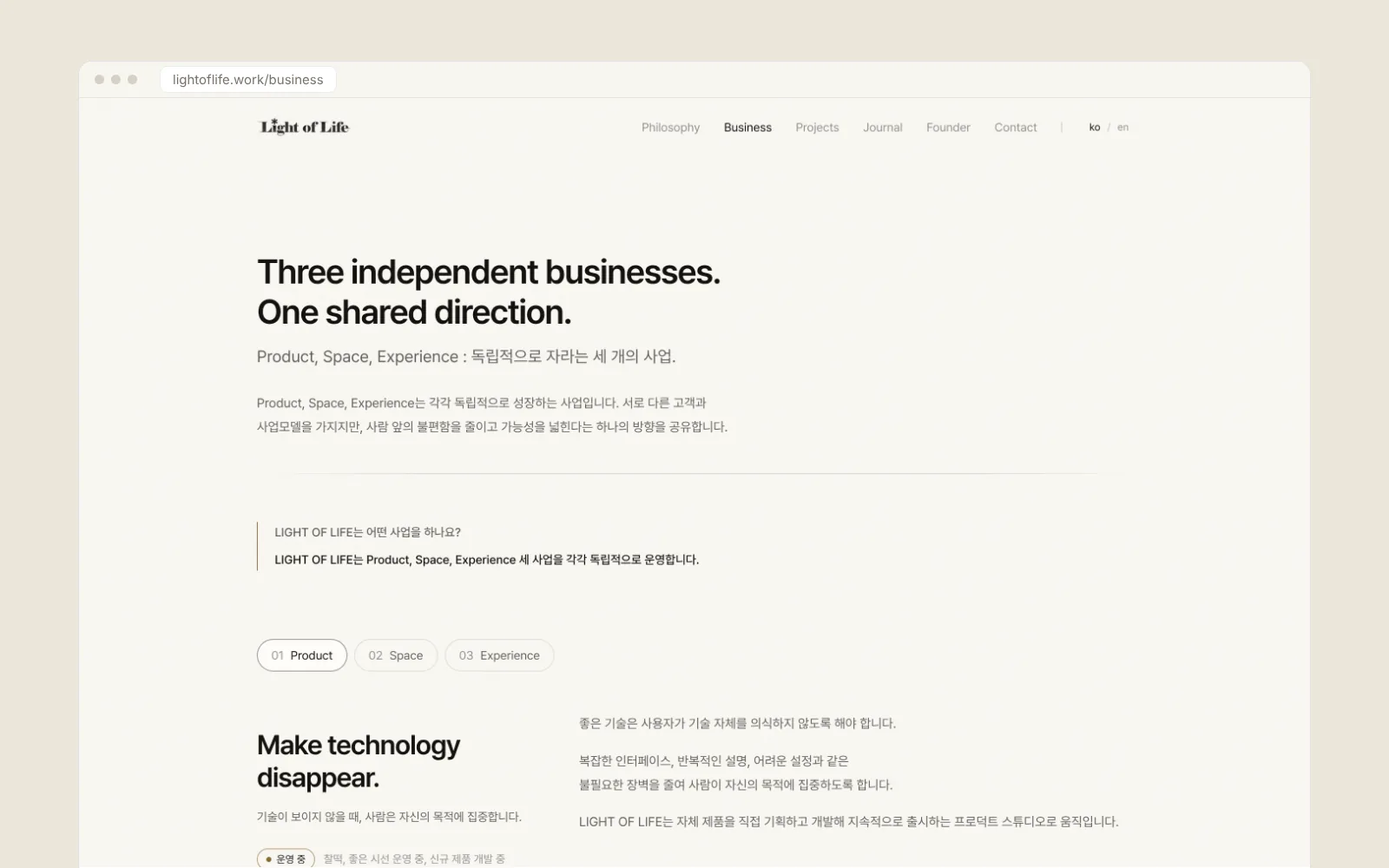
The home page carried nine FAQ entries as FAQPage structured data, but none of them were visible on screen. Structured data that is not on the page can violate search engine guidelines.
So we put the same questions and answers on the home page as a visible section. The screen and the structured data read from one source, so one cannot change without the other. All nine now match word for word.

2. Get the language tag right
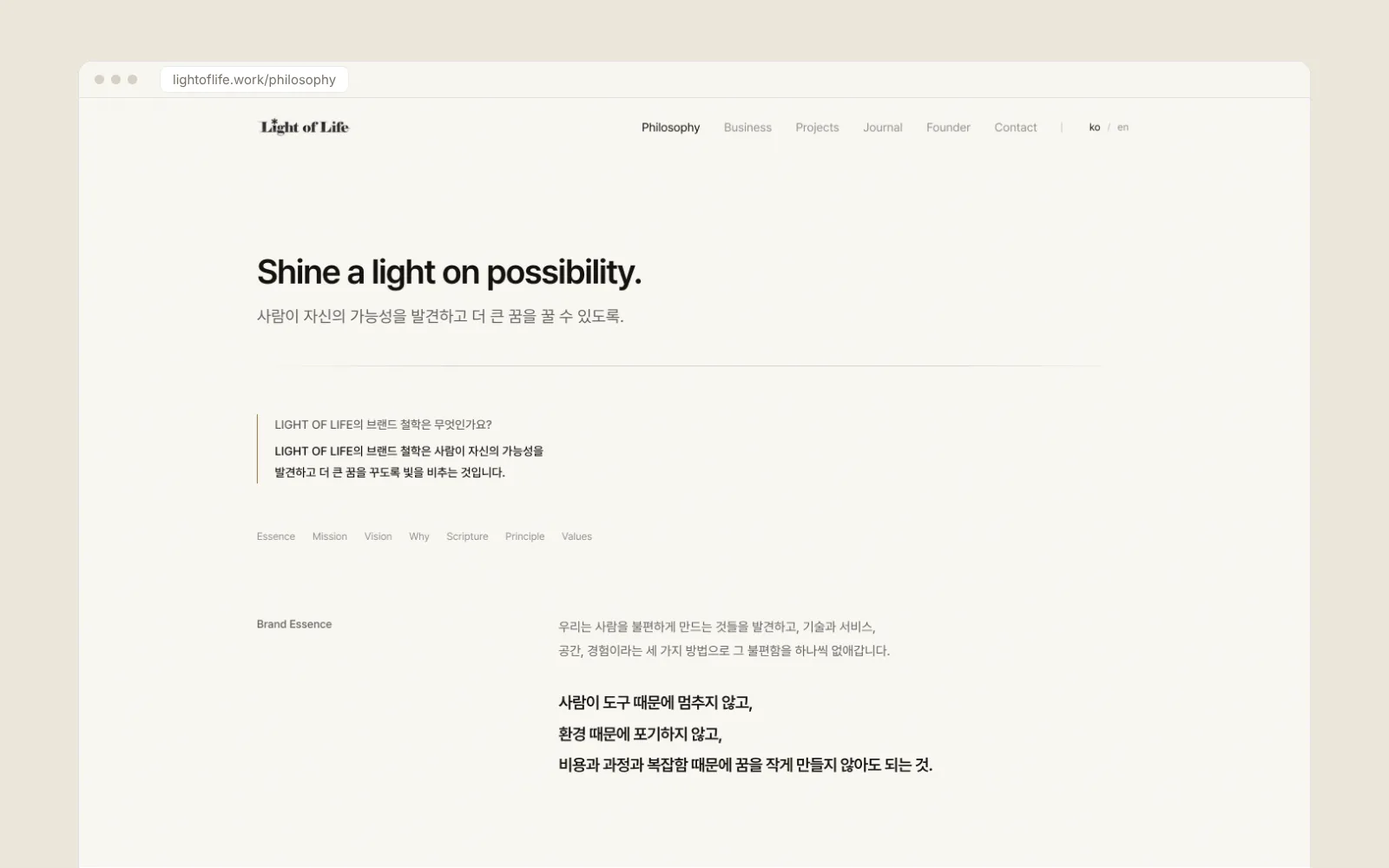
Every English page under /en was served as <html lang="ko">. The hreflang links were correct, but the pages themselves claimed to be Korean. We gave each language its own root layout, so English pages now ship lang="en".
3. Sitemap dates should be real
Every page in the sitemap showed the build time as its last modified date. When every deploy marks every page as just changed, search engines stop trusting the value. We now record the date each page actually changed, and posts use their published and updated dates.
4. One question and one answer per page
Answer engines pick out sentences that answer a question rather than summarizing a page. So each page now opens with the question it answers and a one-sentence direct answer that names its subject. The same pair ships as that page's FAQPage.
5. Announce new posts quickly
- The journal has RSS feeds, one for Korean and one for English.
- After each deploy, every URL in the sitemap is sent to IndexNow. Keeping the list by hand guarantees new pages get missed.
- robots.txt allows AI search crawlers, along with Naver (Yeti) and Daum (Daumoa).
- Each page has its own share image, so a shared link shows which page it is.
6. Keep fixes from breaking again
Finally, we wrote a check that runs before every deploy. It confirms each page has one h1, a title and description, a canonical URL, language pairs, the right language tag, valid structured data, visible FAQ text, and entries in the sitemap and RSS. If anything fails, the deploy stops. Right now all 24 pages pass with no failures.
Guarding against regressions lasts longer than fixing something once.
What is left
Registering with search engines and measuring results happen outside the site, so we handle them separately. In two weeks we will measure whether visibility and citations actually changed, and add the results to this post.